Showing posts with label White House. Show all posts

01 September 2014

Shouldn’t the ‘minimum-wage’ include compensating unpaid interns?

Loaded with optimism and student loans, the law grad sees the advertisement that reads: Democratic member of the Senate Committee on the Judiciary seeks law clerk for Fall 2014, full time, unpaid.

Presuming that law grad did not have a trust fund or wealthy parents to subsidize the inflated cost of living for Washington, DC, working for the powerful on Capitol Hill would be outside consideration.

How in the world can those who tout raising the minimum wage get by without paying at least the minimum for assistance?

Before scratching your head too much, let’s look at the economic and legal dynamics involved in this
White House internship programme. 2011 Getty/McNamee.
conundrum.

During President Barak Obama’s 2014 State of the Union Address, he asked Congress to pass the Harkin and Miller bill and raise the federal minimum wage from $7.25 to $10.10 per hour. The President went one step further by unilaterally signing Executive Order 13659 which raises the wage of federally contracted workers to $10.10 per hour.

Perhaps it should be noted here that White House interns are not paid. Yet these are highly sought after positions that see young brains fulfilling a full time position for six months to a year.

According to a 2012 Intern Bridge survey, more than half of all post-undergrad and grad-school internships and traineeships are unpaid. Many students desperately really on these work related experiences to land higher paying career type jobs.

In the years since the 2007-08 Financial Crisis, unpaid internships and traineeships have become the new norm. Many companies were unable to pay new workers during the crisis and new workers were eager just to gain experience.

The wave of unpaid internships in the private sector came to a skidding halt in June 2013 when a federal district court in New York held in Glatt et al. v. Fox Searchlight Pictures, Inc. that the company had violated the Fair Labor Standards Act by not paying for “benefits received.”

The Department of Labor has developed a six-part test, based on Supreme Court case law relating to railroad company’s trainees, to determine whether for-profit companies must pay interns.

In short, in order for a private business to meet Labor’s standards, the internship must be wholly for the benefit of the intern and not the employer – that’s a pretty tough to satisfy.

According to The 2013 Student Survey, a graduate who had a paid internship experience makes a medium starting salary of $51,930, compared with $35,721 for those who had an unpaid internship experience.

Law firms are also willing to pay for new associate’s experiences and connections to judges and lawmakers through clerkships. Many firms will pay a 20% bonus on top of a starting salary.

President Obama announces a $10.10 hourly minimum wage
during the 2014 State of the Union Address. USAToday.
With some of the highest paid first-year associates earning just over $160,000, why are we worrying about the President and his Congressional cronies not paying their clerks?

Firstly, if it was the private sector, it would be illegal under the pay-for-benefits test.

Secondly, with the average law school debt in America hovering around $150,000, it is very difficult for a newly minted grad to go a year without a pay check, no matter how amazing the potential bonus, from the potential job, might be. Unless, of course that grad has the coveted silver-spoon in the mouth, in which case, even a minimum wage would be offensive to the privileged elite.

This is not a Democrat vs. Republican issue; instead, this is a remnant of the old Governmental privilege which must go away. Currently, only the better-off people in society get to undertake such unpaid positions. The less fortunate must take paid positions that don’t come with connections.


If the President and Congress want everyone to be paid a proper wage, then shouldn’t “everyone” include the currently unpaid staff?

05 September 2013

Legal & political aspects of military intervention in Syria

Should the US attack Syria? Has Assad used chemical weapons against his own people? Would US intervention violate public International law?

Regardless of the answers to these questions, an upcoming vote on Capitol Hill illustrates how foreign affairs are as much about domestic politics, as it is about International relations.

Syrian President Bashar  al-Assad and his wife, Amsa.
President Obama has played a brilliant game of chess against the Republicans. How you might ask?

Prudently, the President is wise in asking for a Congressional vote. It is a tough decision and vesting everyone in the decision process is smart.

Politically, a Congressional vote on Syria puts the Republicans on record prior to the 2014 mid-term
elections, which makes such a vote all the more sensitive and strategic.

The Constitution does not require the President to ask Congress’ permission to engage the armed forces in hostilities. War making powers are shared jointly between the Executive and Congress.

Is military action against Syria legal under public International law?

Under the UN Charter, states may only use force in two instances: self-defence or when the Security Council has authorized force to maintain or restore international peace and security.

Here, Syria has not attacked American citizens, assets, or allies; nor has the Security Council authorized the use of force. The Syrian government is merely engaging in an internal conflict to suppress rebels.

Additionally, Customary International law would allow Syrian government officials, such as Bashar al-Assad to be prosecuted for crimes against humanity and the use of chemical weapons, even though Syria has not become a party to the Genocide, Torture, or Ban on Chemical Weapons conventions.

Regardless of International conventions and customs, US law recognizes the ratified treaties at taking the same status as federal law. This means, the UN Charter, as a treaty, is tantamount to federal law. Congress is free to override federal law by adopting resolutions. So under an American law analysis, Congress can do whatever the hell it wants, so long as that action doesn’t violate the Constitution.

The notion that Congress must pre-approve military action is erroneous. Article I, Section 8 of the Constitution grants Congress a non-specific power to ‘declare war.’ However, of the 130 plus times military action has been taken abroad, Congress has only declared war 5 times.

US President Barak Obama with Speaker John Boehner (left).
Under the Presidential War Powers Act, President Obama, as commander-in-chief, may introduce the military to hostilities without Congressional notice for a period of 60 days. The Act goes on to mention that hostilities must comply with: (i) declaration of war, (ii) statutory authority, or (iii) national emergency. Additional time for hostilities is granted upon Congressional approval.

Here, President Obama would be allowed to introduce the military into foreign involvement without Congressional approval.

Why ask Congress for permission if President Obama doesn't legally need it?

Remember the mid-term elections are fast approaching. A Congressional vote on Syria puts the Republicans on record prior to the 2014 elections, which makes this vote highly political. This is why Speaker John Boehner, a supporter of Syrian intervention, isn't making this a partisan vote – he needs to ensure Republicans are re-elected.

Politically, the issue of Syria is dividing the Republican Party into the Paul Republicans (non-interventionists) and the McCain Republicans (the war-hawks).

Here in Western Colorado, Congressman Scott Tipton announced he would be voting ‘no’ during a town hall meeting recently in Durango.

Both of Colorado’s US Senators, Mark Udall and Michael Bennet, are vacillating over how to vote regarding Syrian intervention to punish the use of chemical weapons.

Meanwhile, on the International stage (remember, I said foreign affairs was only partly about domestic politics), Russian President Vladimir Putin has asked the US to present evidence before the UN Security Council that the Assad government was responsible for the chemical weapons attack.

If the US proceeds without a UN Security Council resolution, then legally this action would be pre-emptive self-defence or a unilateral enforcement an International custom (the ban on chemical weapons). Both concepts would dramatically expand the Bush precedent.
Targeted Syrian assets.

Recently, in Stockholm, President Obama said, “My credibility isn't on the line, the whole international
community's credibility is on the line, Congress' credibility is on the line.”

Actually, Mr President, your credibility is on the line, as you’re the one proclaimed Syria used chemical weapons and that the US should take punitive action.

While the White House has gotten the entire International community in a frenzy, one thing is for certain, if the US strikes Syria, no longer will President Obama be able to blame the results on the George Bush Administration. 

12 August 2013

Snowden – traitor, patriot or whistle-blower?

Traitor, patriot, or whistle-blower? Americans took to the streets in protests over Zimmerman’s acquittal, yet reactions to the National Security Agency (NSA) covertly collecting phone and email records has been greeted with a mediocre response. How should those who leak confidential information to the media be regarded?
“[T]he Obama administration has gone after more watchdogs, leakers than any previous administration by far. And that raises serious questions,” Dan Rather, retired CBS news anchor said during a CNN interview on August 1, 2013.
Pfc. Bradley Manning, John Kiriakou, Thomas Drake, Edward Snowden, and others have been pursued by the Obama Administration. The Justice Department has unapologetically used warrants to obtain phone and email records of Associated Press (AP) journalists in an effort to quash governmental sources leaking confidential information to reporters.
The political parties are divided on whether whistle-blowers should be regarded as traitors or patriots.
Rep. Michelle Bachmann (R-Minn.), concurring with the Obama Administration, criticized Snowden for revealing sensitive information to the news media, saying, “This was not an act of a patriot; this was an act of a traitor.”
Rep. Justin Amash (R-Mich.), during a FOX News Sunday interview, said, “As far as Congress is concerned, sure, [Snowden’s] a whistle-blower.” Rep. Amash sponsored the Limiting Internet and Blanket Electronic Review of Telecommunications and Email Act (LIBERT-E Act), which narrowly failed, 217-205, during a July 24, 2013 bi-partisan House vote. The legislation would have restricted the NSA’s carte blanche data collection under the Patriot Act and required Congress to be briefed on NSA and FISA Court activities.
Edward Snowden
By definition, a government employee (whistle-blower) is protected from retaliation when that employee discloses employer wrongdoing, illegalities, or abusive conduct. As a comparative example, the Colorado Employee Protection Act (1979) requires a whistle-blower to make a good faith effort to disclose information to a supervising authority or member of the General Assembly.
Pfc. Manning stole more than 700,000 secret foreign affairs and war documents in 2010 and gave them to Julian Assange, who published the information on the Wikileaks website. The documents revealed U.S. troop movements and soldiers’ identifications, along with exculpatory diplomatic cables filled with colorful adjectives describing foreign government officials.
Pfc. Manning was found guilty of 19 criminal charges on July 31, 2013.
John Kiriakou, a former CIA officer, was sentenced to 30 months in federal prison in January 2013 for leaking classified information to a member of the AP in 2008. The leak included the operative’s name who participated in creative forms of interrogation during the initial stages of the War on Terror.
Thomas Drake, formerly an NSA executive, was prosecuted in July 2011, under the Espionage Act for ‘willful retention of national defense’ secrets.’ Drake and three cohorts, exposed the NSA Trailblazer program, which was a billion-dollar computer-based program to analyze Internet content, particularly email and cellular phone communications.
Drake leaked classified info to members of Congress and the New Yorker. The action complied with the federal whistle-blower legislation. The night before his sentencing hearing, 60-Minutes broadcast a feature report on Drake which resulted in the Justice Department dropping nearly all the charges. Today Drake works in a Washington, DC Apple Store. Incidentally, Drake recently ran into Attorney General Eric Holder, who was shopping for iPhones.
The Justice Department has yet to apprehend Edward Snowden, the former NSA contractor, who leaked information about the NSA Prism program and the FISA secret warrants for Verizon customers’ data to London’s Guardian newspaper and theWashington Post. The Obama Administration cancelled Snowden’s passport, which resulted in Snowden spending a month in the transit zone of Moscow’s Sheremetyevo Airport. Despite requests from the White House to extradite Snowden to the US, Russia recently granted Snowden a one-year asylum passport.
Manning, Kiriakou, Drake, Snowden attempted to be whistle-blowers, yet only Drake arguably was legally a whistle-blower, as he made a good faith effort to inform superiors and members of Congress prior to going to the press.
Should the analysis pivot on whether revealing domestic email and phone data gathering programs ought to be considered government-wrongdoing, illegal activity, or abusive conduct?
If one believes people are better off knowing the truth, then there is value to society in leakers revealing such information as the military operations in Vietnam outlined in the Pentagon Papers, the Watergate scandal, abuses at Abu Ghraib, or the Obama Administration’s efforts to block all leaks of information to reporters, including those revealing NSA collection of phone and email data.
A gentleman’s agreement exists between the free press and interests of national security. This agreement is a delicate and fragile one and precedential pursuits of the Obama Administration should make even the ardent liberal nervous. The media balance a fine line of aiding these so called ‘whistle-blowers’ and providing the scrutiny that Congress willfully turns a blind eye to providing.
____________________
M. Soper. 'Snowden – traitor, patriot or whistle-blower?' Op Ed. Western Slope Watch Dog. <http://westernslopewatchdog.com/2013/08/guest-editorial-snowden-traitor-patriot-or-whistle-blower/> 10 August 2013

06 February 2011

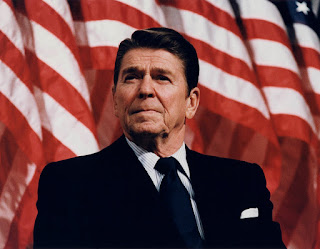
The Reagan Centennial: tribute to one of America’s greatest presidents

Today (6 February 2011) marks the centennial of the birth of Ronald Wilson Reagan, a man who lived the American Dream from stardom on the silver screen to serving as governor of the most populace state and finally leader of the free world. Reagan was also the last American President to hale from a non-Ivey League background. He was born in Tampico, Illinois to an alcoholic father, Jack, and supportive mother, Nelle, who were relatively poor, and struggled at times to put food on the table. Reagan had a particularly strong faith in the goodness of people, which stemmed from the optimistic faith of his mother. Reagan’s first job was as a lifeguard on Illinois’ Rock River and chalked up 77 rescues from 1926 to 1933. In 1932, he graduated with a B.A. degree in economics and sociology from Eureka College (Illinois). During college, Reagan gained a love for politics which lead to him being elected student-body president. He also was captain of the swim team and a member of the football team.

Having graduated in the middle of the Great Depression, Reagan struggled to find a job, but eventually landed one in Davenport, Iowa, working for a radio station. His main tasks were to re-create broadcasts of Chicago Cubs baseball games from telegraph scripts. In 1937 Reagan first travelled to California to cover the Cubs’ spring training. While in California, Reagan launched his acting career by landing a role in the film, Love is on the Air, also that same year he enlisted in the US Army Reserves as a private. By the end of the year Reagan was commissioned a second lieutenant. In 1942 Reagan was ordered to active duty, unfortunately his terrible eyesight limited his service. He was reassigned to the Army Air Force Public Relations division and subsequently to the 1st Motion Picture Division. By the end of the Second World War, Reagan’s unit had produced nearly 400 military training and promotional films.

By 1940, Reagan had acted in 19 films, including Dark Victory and a role in the film, Knute Rockne, All American, in which he acquired the lifelong nickname of “The Gipper”; having played the coach, George “The Gipper” Gipp. In 1940 Reagan was in the film Santa Fe Trail, which ensured his success as an actor, also that same year he married actress Jane Wyman and together they had two children, Maureen (1941-2007) and Christine (who died as an infant) and adopted a third, Michael (born 1945). Reagan’s personal favorite was his 1942 film, Kings Row in which his starred as a double amputee and declared, “Where is the rest of me?” This quote also served as the title of his 1965 autobiography. Reagan hired his mother to answer fan mail and she would sign his name to photographs and letters – a habit which he was later criticized. Unfortunately Reagan’s stardom was knocked down when he was ordered to active duty by the army in 1942.

After World War II, Reagan was elected third-vice president of the Screen Actors Guild and subsequently elected president (1947-1952), leading the organization through the Red Scare of the House Committee on Un-American Activities. Reagan provided the FBI lists of the names of actors with communist leanings. Reagan held true to his principles of democracy, freedom and capitalism even as an actor in southern California. In 1949 Reagan and Wyman were divorced (Reagan is the only American President to have ever been a divorcee). In 1949, Reagan met actress Nancy Davis, whom had mistakenly appeared on a Hollywood Black List, the two were married on 4 March 1952. Together they had two children: Patti (born in 1952) and Ron (born 1958). Throughout the 1950s Reagan starred in the GE Theater, a series of television dramas, which earned him $125,000 per annum ($1.25 million per annum in 2011 USD). While working for GE, Reagan was paid to tour the company’s factories, giving a series of speeches, it was this experience which served him well for his future career as a politician. His acting career wound-up as the presenter on the TV show Death Valley Days (1964-65).

Reagan began his campaign for governor of California in 1965 and his “Time for Choosing” speech at the state convention ensured his nomination as the Republican candidate. In November 1966, Reagan defeated two-term incumbent Pat Brown and was sworn in on 3 January 1967. The UC Berkley protests resulted in Reagan showing decisive leadership in reigning in anarchy and restoring order to California. Reagan also inherited a terrible economic situation and froze hiring and raised taxes to balance the budget and pay off the debt. Reagan was re-elected in 1970. In 1974, Reagan opted not to seek a third term as governor, but to focus his attention on challenging President Gerald Ford for the Republican nomination in 1976. Jerry Brown, a Democrat, succeeded Reagan as governor; ironically, the same Jerry Brown was elected to succeed another actor turned politician, Gov. Arnold Schwarzenegger in January 2011. Ford narrowly defeated Reagan at the convention and then subsequently lost to the presidency to Georgia Governor Jimmy Carter. The terrible economy of the 1970s (inflation had reached 12.5 per cent and un-employment was close to 10 per cent) and the Iran Hostage situation lead Reagan to challenge and defeat Carter in the 1980 cycle. During the election, Reagan famously said, “A recession is when your neighbor loses his job. A depression is when you lose yours. And recovery is when Jimmy Carter loses his."

On 20 January 1981 Ronald Reagan was sworn-in as the 40th President of the United States of America. In his first inaugural address, he declared, "In this present crisis, government is not the solution to our problem; government is the problem." Hours after taking office, the remaining 52 hostages taking from the American Embassy in Tehran by militant students were released. Only 69 days after taking office, Reagan and three others were shot by John Hinckley, Jr. while he was leaving a speaking engagement at the Washington Hilton in Washington, D.C. The assassination attempt resulted in a punctured lung and Reagan joking with his doctors prior to surgery by saying, “I sure hope you guys are Republicans.” The event also resulted in Secretary of State Alexander Haig controversially declaring, “I am in charge here!” – forgetting that Vice President George H.W. Bush was acting president during Reagan’s recovery. Reagan famously quipped to his wife, “Honey, I forgot to duck!”

Reagan, dealing skillfully with Congress, obtained legislation to stimulate economic growth, curb inflation, decrease un-employment and strengthen America’s national defense. He embarked upon a course of cutting taxes and Government expenditures. Reagan pledged to end the Cold War and realized the US could out spend the Soviet Union and economically bring an end to communism. Federal defense spending resulted in a giant deficit, but by 1989 the Berlin had fallen and the Iron Curtain had collapsed. Reagan also took on the Air Traffic Controllers who had gone on strike, nearly shutting down the entire nation. From the Rose Garden, he told air traffic controllers that if they did not report for work within 48 they would forfeit their jobs and be terminated. On 5 August 1981, Reagan fired 11,345 air traffic controllers who failed to report to work and were thus in breach of the Labor–Management Relations Act 1947.

In 1984 Reagan easily won re-election, carrying every state except Minnesota, Democrat challenger Walter Mondale’s home state. The American prosperity was such, that citizens overwhelmingly answered the president’s question in the affirmative – “ask yourselves, are you better off today than you were four years ago?” In 1986 Reagan and Congress agreed to an overhaul of the income tax code, which eliminated many deductions and exempted millions of people with low incomes. By the end of the Reagan Administration, Americans were enjoying the longest peacetime prosperity without recession. By the end of the decade, inflation was at 4 per cent, un-employment was below 5 per cent and Reagan had managed to not only cut taxes across the board, but decreased the size of the Federal Government by 2 per cent per annum. Reigning in spending slowly continued though to the early 2000s. The economic policies of the Reagan Administration opened the doors for the tech boom of the 1990s.

A “war against international terrorism” was declared after evidence revealed Libya was involved in an attack on American soldiers in a West Berlin nightclub. During the Iran-Iraq War (1980-1988), Reagan ordered the Navy to escort oil tankers through the Persian Gulf ensuring the free movement of oil. Also a war on drugs was declared and Nancy Reagan lead a campaign aimed at American school children to “just say no” to drugs. In keeping with the Reagan Doctrine, he gave support to anti-Communist insurgencies in Central America, Asia, and Africa. The most famous gave rise to the Iran-Contra Affair of 1986, in which the US sought to improve Iranian relations by agreeing to supply arms to Iran. Israeli middlemen sold hi-tech arms in exchange for Iran negotiating with Lebanese Shia group, Hezbollah, to release six American hostages. Meanwhile, the proceeds from the arms sales were used to fund the Contras in Nicaragua, who were battling a communist regime. Congress has specifically outlawed such deals. The International Court of Justice (ICJ) in Nicaragua v United States (1986) held the US was in breach of their obligation to respect state sovereignty. In less than a week Reagan’s approval rating dropped from nearly 70 per cent to less than 46 per cent. Reagan’s critics dubbed him the “Teflon President”, as in a couple weeks his popularity rating was in the mid-60s again. Reagan was the “Great Communicator” and spoke frankly with the American people and the world.

Reagan’s foreign policy plan of “peace through strength”, which was the re-creation of President Teddy Roosevelt’s policy of “walk softly and carry a big stick” had fully developed after his second inauguration. In four dramatic meetings, between 1986 and 1988 in Geneva, Reykjavík, Washington, D.C., Moscow, with Soviet leader Mikhail Gorbachev, Reagan recognized the shift in mentality from adversary to conciliation and used diplomacy to negotiate the Intermediate-Range Nuclear Forces (INF) Treaty at the White House, which eliminated intermediate-range nuclear missiles. Reagan's personal mission was to achieve "a world free of nuclear weapons". The two leaders laid the framework for the Strategic Arms Reduction Treaty, or START I, which was recently renewed by President Obama and his Russian counterpart Dmitry Medvedev after ratifications in both the US Senate on 22 December 2010 and in the State Duma on 24 December 2010 and entered into force when the United States and Russia exchanged instruments of ratification on 5 February 2011 in Munich, Germany. On 12 June 1987, while speaking in front of the Berlin Wall's Brandenburg Gate, President Reagan declared, "General Secretary Gorbachev, if you seek peace, if you seek prosperity for the Soviet Union and Eastern Europe, if you seek liberalization, come here to this gate! Mr. Gorbachev, open this gate! Mr. Gorbachev, tear down this wall!" The final sentence of this quote was taken out of the speech by the President’s speech writers and his advisors warned against such a bold statement, but after the cheers from the crowd, Reagan looked not to his notes or teleprompter, but to the crowd and uttered those now infamous words.

On 20 January 1989, the Reagans left office and retired to Bel Air, California a suburb of Los Angeles. Reagan, throughout his presidency enjoyed spending time at his ranch, “Rancho del Cielo”, near Santa Barbara. Reagan’s last speech was on 3 February 1994 in Washington, D.C. and his last official public appearance was at the funeral of the late President Richard Nixon. In August 1994, Reagan announced to the country he had been diagnosed with Alzheimer’s disease, an incurable neurological disorder which destroys brain cells and ultimately causes death. In 2001 the former president fell at his home and broke his hip. President Reagan passed away on 5 June 2004. His body was flown to Washington, D.C. to lie in state in the rotunda of the Nation’s Capitol.

A hallmark of Reagan was his witty sense of humor and his grandfatherly image of strength and wisdom. As a sound check prior to his weekly radio address in August 1984, Reagan made the following joke as a way to test the microphone: "My fellow Americans, I'm pleased to tell you today that I've signed legislation that will outlaw Russia forever. We begin bombing in five minutes." Ronald Reagan’s legacy continues to be influential on the development of the United States today. President Barak Obama’s Christmas 2010 reading list included two books: “President Reagan: The Role of a Lifetime” and “Governor Reagan: His Rise to Power”, by Lou Cannon.