Showing posts with label politics. Show all posts

09 May 2017

Crime, homelessness, economics, & the politics of cannabis

Local policy makers are touting the economic benefits of commercial cannabis cultivation as a meansNational Public Radio’s Central California affiliate, a one-acre grow operation could bring in $19 million a year![1] While profits vary, jobs in the 420-industry, such as bud trimmer earn $12-13 an hour, according to Forbes. The grow master or cultivator can expect to earn $100,000+ per year.[2] to replenish depleted coffers. Looking at the numbers, it is hard to deny their claims. According to a report by

Colorado’s Amendment 64 was passed by the voters in November 2012; and the commercial sale of marijuana to adults, 21 years of age and over, for recreational use began on January 1, 2014.[3] This date is important, because in the March 15, 2017 issue of the Grand Junction Daily Sentinel, it was reported that property crimes and all crimes reported saw a major increase from 2014 onwards. While violent crimes declined in the year 2014, thereafter, violent crimes have also seen a significant increase.[4]

One hypothesis is that crime and homeless have increased in Colorado since the legalisation of recreational marijuana.

The Sentinel article quotes Grand Junction Police Chief, John Camper, as saying, “I talk to police chiefs throughout the state and they’re seeing the same thing that we’re seeing – a level of violence that we haven’t seen before,” noting that it’s hard to pinpoint the reason for the rise.[5] Chief Camper is quoted later in the article as saying increases in property crimes are “often an indication of an increase in drug activity.”[6]

From 2014 to 2016, School District 51 students, who are broadly identified as homelessness, soared nearly 55% from 388 to 600, according to a Daily Sentinel article at the time.[7]

The 2016 Housing and Urban Development Report on Homelessness, reports that “Between 2015 and 2016, the number of individuals experiencing homelessness increased in 22 states. The largest absolute increases were in California (4,504 people), Washington (1,374 people), and Colorado (721 people).” [8] Percentwise, this was 13 points up from the previous year and represented a reversal of the trend which showed homelessness slightly declining over the past decade.[9]

In privileged conversations, some Western Colorado policymakers have expressed to this author their belief that the legalisation of recreational cannabis has led to an increase in crime and homelessness.

Looking at the numbers state-wide, the Colorado Bureau of Investigation reports that all major crime classes have increased 6.20% since the beginning of 2014.[10] Between 2013 and 2014, crime actually decreased by one percent. Looking at the aggregate picture of crime in Colorado for the decade 2005 to 2015, crime generally was decreasing annually until 2012.[11]

Comparing these state-wide numbers with more pronounced local findings, there does suggest a slight correlation between increased crime and legalisation of recreational cannabis. More data and in-depth analysis will be required to know for sure, but certainly those who have expressed concern are not without merits.

The Financial Crisis 2007-08, sparked by the subprime mortgage market and excessive global barrowing and risk taking, had major ramifications at the local level. By 2009, Colorado hit the high-water mark with 46,394 home foreclosure filings.[12] Smaller jurisdictions, such as Delta County saw their worst numbers in 2010, with 264 foreclosure filings.[13]

In 2009, a small group of Delta citizens, from various churches, concerned by seeing homeless people lingering around town, organized to start a homeless shelter. As the Financial Crisis became entrenched and foreclosures mounted, industries such as the local lumber company and saw mill closed, followed by the North Fork coal mines. At the same time, Mesa County saw a major reduction in the Oil and Gas industries. As the layoffs, failures, and foreclosures mounted, so did the homeless situation.

Homelessness had increased enough locally, that in November 2014, the Abraham Connection (Delta County’s Homeless Shelter), made the decision to move out of the Delta Methodist Church’s basement and begin construction of a $750,000 facility,[14] which opened in November 2015.

During the Nov. 2013–May 2014 season, the Abraham Connection provided 840 bed nights. Contrast that number with 2,665 which was the total number of bed nights provided during the Nov. 2016–May 2017 season.[15] In three years’ time, that is a 217% increase in homelessness.

Looking at Delta County as a case study, with over 1,000 coal mining jobs gone, a couple hundred timber related jobs chopped, and countless ‘mom and pop’ stores shut for good, a rising homeless population and a school district and hospital struggling under declining revenues due to ratcheted-down property valuations, many policy makers have turned to marijuana as the saviour.

Delta County Commissioner, Mark Roeber, told the Denver Post that he receives calls “almost daily, saying marijuana is going to save us.”[16] While Delta County, and the municipalities within the county, have sustained a prohibition on commercial retail and cultivation since 2013, some towns have explored the retail pot question.

In 2014 Paonia voters rejected a retail pot question, as was the case in Hotchkiss in 2016. By 2017, Orchard City considered repealing their prohibition on commercial marijuana, as did the Paonia town council.[17]

Aside from the cultivation operation owner, the grow master or cultivator is the only employee who would earn what a displaced coal miner had earned annually.[18] Other jobs in the 420-industry would pay comparable to entry level west slope salaries.[19]

While the Green Rush has more likely than not increased crime and homelessness, the costs of these increases to local societies should be calculated when setting budgets for social serves, programs, and law enforcement. Communities should factor in all costs when considering the economics of boosting a city or county’s coffers.


[1] Romero, Ezra David. "California Farmers Consider Cashing In On A New Crop . . . Marijuana." Valley Public Radio. NPR, 15 Dec. 2015. Web. 15 Mar. 2017.
[2] Borchardt, Debra. "The Five Best Marijuana Jobs." Forbes. Forbes Magazine, 27 May 2016. Web. 15 Mar. 2017.
[3] Healy, Jack. "Up Early and in Line for a Marijuana Milestone in Colorado." The New York Times. The New York Times, 01 Jan. 2014. Web. 15 Mar. 2017.
[4] McIntyre, Erin. "All Categories of Crime in GJ rising Sharply." GJSentinel.com. The Grand Junction Daily Sentinel, 15 Mar. 2017. Web. 15 Mar. 2017
[5] Ibid.
[6] Ibid.
[7] Langford, Katie. “Homelessness on rise for kids in District 51: Increase due to better identification, economic and family reasons.” The Grand Junction Daily Sentinel, 18 April 2016. A1+
[8] “The 2016 Annual Homeless Assessment Report (AHAR) to Congress.” US Department of Housing and Urban Development. Office of Community Planning And Development, Nov. 2016. Web. 1 May 2017. Pg.14.
[9] Ibid.
[10] “Crime in Colorado Annual Reports 2005-2015.” Colorado Bureau of Investigation. Colorado Department of Public Safety, 2016. Web. 8 May 2017.
[11] Ibid.
[12] “Foreclosure Reports and Statistics 2002-2015.” Division of Housing. Colorado Department of Local Affairs, 2017. Web. 8 May 2017.
[13] Delta County Treasurer’s Office Report 2006-2016.
[14] Press Release Nov 2014. Abraham Connection / Delta County Homeless Shelter.
[15] Facebook announcement 1 May 2017. Abraham Connection / Delta County Homeless Shelter. Web. Accessed 8 May 2017.
[16] Finley, Bruce. “Collapse of Colorado coal industry leaves mining towns unsure what’s next.” The Denver Post, 14 May 2016. Web. Accessed 8 May 2017.
[17] Soper, Matt. “Timeline details Marijuana votes and regulations (Delta County, Colorado).” Delta County Independent, 1 March 2017.
[18] Op. Cit. see Finley article and Borchardt article.
[19] Ibid. 

17 October 2016

Amendment 71 pinches our ability to govern ourselves

A lot of folks have told me they are voting for Amendment 71 because it will make the state Constitution harder to change. The reality is Amendment 71 will kill the constitutional initiative system in Colorado, as it creates draconian barriers to direct democracy preventing ordinary Coloradoans from exercising an important constitutional right.
Deciding big constitutional ideas by ballot is a Colorado tradition that goes back over a century. Often times Colorado voters are faced with deciding tough issues that legislators cannot or will not address themselves. Such issues have included: term limits, campaign finance, legalization of marijuana, and limitations on state expenditures (TABOR). Coloradoans have also used initiatives to ban the 1976 Winter Olympics, prohibit underground nuclear explosions, and ban state funded abortion, along with making Colorado a right-to-work state in 1958, legalizing the sale of alcohol in 1932, and creating the power to recall politicians.
Out of all these initiatives, very few are actually approved by the voters. see table
The direct initiative process was not part of the original state constitution in 1876, but became law in the early 1900s when a group of voters got frustrated by the state government being overly influenced by big industries, such as railroads and timber.
In 1912, the first year the right was available in Colorado, voters weighted in on 32 initiatives. Commencing with that first election, some pundits have complained about the process being too easy and a tool used by various voter groups. Lobbyists and special interests enjoy a cozy relationship with representative state government and democracy (via constitutional initiatives) challenges their chokehold on government.
A major shift occurred in 1988 when a unanimous U.S. Supreme Court held, in Meyer v. Grant, that under the political speech doctrine of the 1st Amendment, petition circulators could be paid. Prior to this holding, it was a felony in Colorado to pay signature gatherers. While the rate of initiatives making the ballot has increased, success at the ballot box has decreased since the Meyer decision.
There are two opposing theories of the constitution. One view is that the constitution is an expression of the founders and should rarely, if ever, be touched, leaving tremendous leverage for interpretation by the elected and appointed political actors. The other view treats the constitution as an expression of “We the People” and offers some flexibility and the ability for the people to govern themselves.
Regardless of the underlying theory, the foundational document of government ought to be fairly hard to amend. Is the state worse off because the people have too much power?
Colorado is unique, in that, citizens, through the initiative process may bypass the state legislature and place a statute (called proposition) or state constitution (called amendment) question directly on the ballot. Only 24 states (mostly in the West) allow for the initiative process and of these, only 16 allow citizens to directly amend their constitution.
Amendment 71, ironically, seeks to use the current initiative process to make future initiatives more difficult. The amendment calls for collecting a certain number of signatures from each state senate district (there are 35 in Colorado) just to place future amendments on the ballot. Once on the ballot, the amendment then requires a super majority of 55 percent for the initiative to pass. These restrictions are not in place if an initiative seeks to repeal part of the state constitution.
The complexity of Amendment 71 is a bit tough to swallow. Look at all the trouble a few Republican U.S. Senate candidates had earlier this year attempting to petition onto ballots in seven congressional districts. Imagine spreading that out across 35 senate districts!
If an issue is disliked in one or two districts, those districts would have an effective veto, thus depriving the people the ability to decide if the idea is germane or not.
Whether you love participating in democracy or not, one thing is for sure, Coloradans have, and should continue to enjoy, the ability of “We the People,” to freely exercise direct lawmaking power on proposals to change the state constitution.
If an initiative is bad, Coloradoans have proven they are more than capable of voting down amendments. In fact, only one out of five passed over the past five years.
Looking at some of the more recent constitutional initiatives, none would have passed with the supermajority (55 percent) vote tally as required by the proposed Amendment 71, except one. The Taxpayer Bill of Rights passed in 1992 with only 53.6 percent, but would have failed under the current proposal. Amendment 23 which mandated more funding for k-12 education passed in 2000 with 52.7 percent. It also would have failed. Ironically, Amendment 64, which legalized marijuana in 2012 with 55.3 percent of the vote, would still have become law.
Amendment 71 opens the door for opponents to nix the Taxpayer Bill of Rights (TABOR). The supermajority element does not apply if the initiative seeks to repeal a part of the state constitution. Thus, a progressive billionaire could fund a successful repeal with a vote tally of 50 percent plus one.
The ability of the citizens to directly participate in governing is an effective check on the power of the political class. For the average Coloradan, unduly restricting ballot access, as Amendment 71 does, means a critical democratic tool is only accessible to ultra-big-money interests who can afford the higher costs associated with the complicated signature gathering process.
These are the reasons why I am voting no on Amendment 71: Draconian restrictions on direct democracy, hard to meet signature requirements, and a double-standard for repeal vs. new provisions which would prevent ordinary citizens from an important right. For the good of Colorado vote no on Amendment 71.
Matt Soper, a CMU alumnus and Delta County resident, holds law degrees from University of Edinburgh and the University of New Hampshire. 
_________________________________________
M Soper, "Amendment 71 pinches our ability to govern ourselves" The Daily Sentinel (Grand Junction, Colo.) 16 October 2016 print. B7. online. <http://www.gjsentinel.com/opinion/articles/amendment-71-pinches-our-ability-to-govern-ourselv>; accessed 16 October 2017 

04 December 2015

Warnings regarding passions of the popular majority devastating the minority

To some the shutting down of debate and the end of certain ideologies is the aspiration of society. The below is penned response to the effect on the individual when religion, beliefs, ideology, values, morals, history, and law are only in favour of the popular majority.

I have been vilified and told I am the greatest monster known to humanity. But what are my crimes? I am afflicted and distressed, but no offence has been caused by my hand, nor mind or mouth. Yet my enemies have increased and they fiercely hate me. My opinions of love, responsibility, and order have brought the scourge of the mob. When I stand for the rights of the minority, the populace mock me, decry I am what is wrong with society.

All I ask for is strength to carry this through and to be rescued in the end. The only things I carry are my integrity, uprightness, and faith in hope. The nations have entered troubles. Friend and foe is blurred. Right and wrong is not the same as legal and illegal. The legislatures seek to vanquish those out with vogue.

No expression of thought outside the accepted is tolerated. Defence of a liberty becomes grounds for treason. Institutions for free thinking have become the systems for memorization and regurgitation of politically accepted material.

Our legal system punishes the helpless and makes heroes of the wicked. Those with malice live on, but the innocent who incest on privacy are accused of dreadful crimes. Guilty, until proven innocent has become the standard of our system.

History is rewritten and glories of our national past are now shameful to mention. Good deeds are recorded as having guilty intentions and the act of helping one another is written as a mere front. Heroes are vilified and the historic lessons learnt from past mistakes are lost in the rhetoric of advancing an ideology.

The masses have brought loneliness to me. I have retreated to my refuge. My hope is that no shame will be brought one me. Hope is not lost, for I have integrity, a belief in my faith, and a path in truth. I ask for vindication for I wash my hands in innocence, abhor the assemblies of the malice and deceitful. Life is redeemed with mercy and feet resting on level ground.

21 January 2013

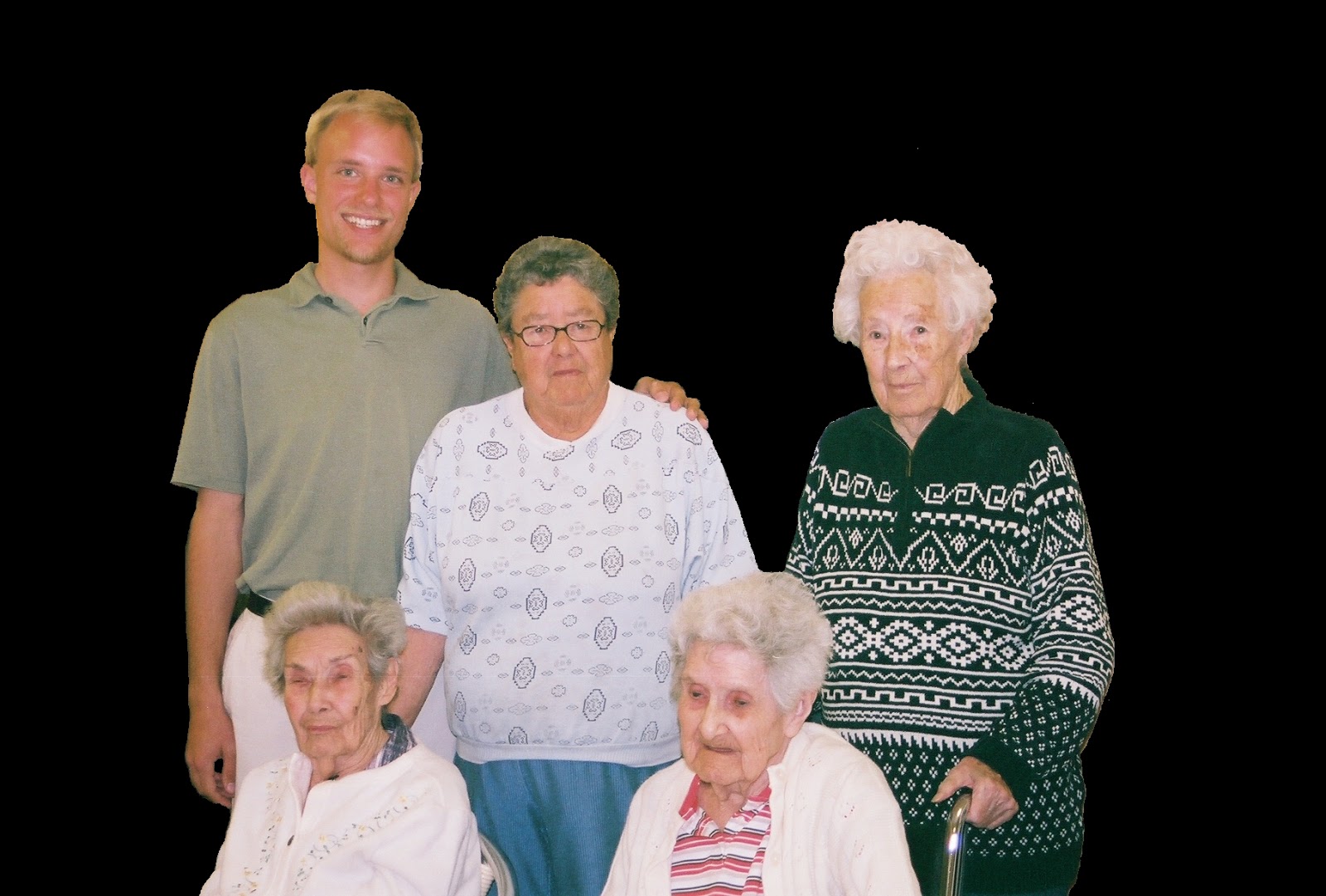
My great-aunt Merle Payne: 1915 - 2013


We'd traditionally have a corned beef &cabbage birthday dinner for Merle
As I heard the word that my great-aunt Merle had passed away, I glanced at the calendar and noted the irony that she died on the Presidential Inauguration Day (January 20th, 2013). My great-aunt Merle had a fondness for politics and especially the Republican Party. Nearly a year ago, my aunt Merle held my hand and said, “I voted for you.” Of the 401 votes I received, I’m most proud of the support from my 97 year old, great-aunt, Merle Payne, who was the long-time deputy county clerk in Delta. She always said she hoped to live long enough to see me elected to a public office, and she did!

check from the sale of home
The last few years has been tough, you never want to see those you love have to move into the ‘old folks home.’ I recall after her home on 650 Dodge Street was sold my mom and I took the check up for her to see. She remarked that in all her years she never imagined holding such a large amount.

Whilst Michael and I would play card with aunts Clara and Thelma, dominos with aunt Marjorie, and we would often times visit aunts Merle and Mabel on Saturday nights at the old Delta Hospital, where they were ‘Pink Ladying.’ Aunt Merle having been the expert at managing books ran the gift shop. A highlight was visiting her, as she would buy us a Hershey’s chocolate bar and then we’d all go down to the cafeteria for supper. Our aunts definitely spoiled my brother and me, but they also instilled in us a sense of volunteerism and supporting our home town.

My aunt Merle was also a prize fighter. One of the funniest stories involving my aunt Merle took place not long after she had taken up residence at Horizons Nursing Home. A nurse was insisting that my aunt Merle do something she didn't want to do. So, my 95 year old aunt gave the nurse a right-hook, breaking the nurse’s nose. Upon returning home for summer break from law school, my aunt Merle assured me once again she was glad to know there would be a lawyer in the family. It was my aunt Merle’s dry sense of humour that would catch you if you weren't quite paying attention.

Cats were my aunt Merle’s favourite creatures. She had two calico cats that were sisters. They lived to be 20+ years old, which is phenomenal for cats. Occasionally I’d be at her house and notice a stray grey cat would sneak in. My aunt Merle would put down some extra cat food and feed the extra mouth until her cats began complaining, then the stray would be evicted out the back door.

It is odd what you remember about a person you’re close to, for me, I remember the way my aunt Merle sat whilst reading. She would have her left leg curled back and her right on top. At a glance she didn't look comfortable, but Michael and I emulated and it’s actually not half-bad.

I can’t really remember my aunt Merle driving, but I do remember her car, it was an old Rambler. She mentioned her car from time to time, but I'm not certain how much she actually drove.

My aunt Merle thought a lot of me, as I was born just a few days after her husband Phil passed away in July 1984. I would grow-up with similar interests in geology, numismatology, and philately. She would save ‘wheat-pennies’ she would find in her change for me.

Aunt Merle was not a very talkative person; she was on the other hand a very good listener. She loved having people come by and visit her and would often times offer a glass of iced-tea in the summer or hot tea in the winter. It is ironic, as when she discovered mochas and cappuccinos, she was forever hooked. After her sight was claimed by macular degeneration, my aunt Merle took to listening to audio books. Several hundred books later, she had listed to Delta library’s entire collection. I can’t fully recall what she read when she could see, but I believe her favourite audio books concerned the cowboys and the American West. 

Aunt Merle with her Colorado flag
For my aunt Merle’s 90th birthday I requested the Colorado flag flown over the State Capitol to be flown in her honour. The governor at the time signed the order and our State Senator who upon hearing it was for an old friend, raised it up the pole himself (I think he was nearly the same age as aunt Merle). This was a testament to how well liked aunt Merle was by those she had worked with in her time as Deputy County Clerk. She knew the laws and ran the office so well that she is the only Deputy County Clerk to have held that position for multiple clerks and of differing political parties. This past summer my aunt Merle’s attention perked when she heard me utter the words Election Day.

After retiring, my aunt Merle was active in the “T and R Club”, which stood for “Tired and retired”. I think she was one of the charter members, but even if she wasn't  she had been involved long enough to have been. She and my aunt Mabel would organize luncheons usually at the Sundance with a programme, treats and a poem. The organization still exists and invited me last summer to talk about Scotland and being the youngest councilman in Orchard City. When my aunt Mabel and aunt Merle were involved, they’d many times call on family to talk about a holiday to an exciting place in the world, a degree recently completed, or anything that was well thought out and of interest to a group of retired ladies.

Friday nights were always exciting growing up, as often time Michael and I would venture over to one of our aunt’s homes for the “Friday night get to gather”. Our aunts would begin the Sabbath together and listen to a sermon, play a Bible game, and emphasise the importance of being a family in Christ and consanguinity. Our aunts would always have a dessert with a cuppa tea. Each one liked their tea slightly different. Aunt Marjorie preferred hot water with a tea bag waved above the rising steam. Aunt Mabel likes her tea with the bag in and out just for colour. Aunt Clara could use aunt Mabel’s tea bag and aunt Thelma liked her tea about like the British do – strong, but not bitter. Aunt Merle usually left her tea bag in the cup. I tried to convince them to try tea with milk, but my aunts always rejected that offer, along with any suggestions to move to any brand besides Lipton’s.

My Great-Aunts Marjorie, Mabel, Merle, Clara and me
A fortnight ago I had my final conversation with aunt Merle. I had mentally prepared myself that she might not wake up, or even know who it was talking to her. To my surprise she spoke. She thanked me for coming to visit, and then proceeded to ask if I had gotten a good night’s rest the night before. I told her I loved her and she acknowledged this and said how grateful she was to have me come and visit.

While aunt Merle didn't quite achieve her goal of seeing age 100, nearly 98 years old is not half bad. I would not have wanted her to continue in the condition she was in, as that is no way to live. Yet she died peacefully, without a struggle or stress, she is sleeping now.

Read by Betty Soper at Merle Payne's funeral in Delta, Colorado on  23 January 2013.

30 November 2012

Farrelly v. Concord: never date the police chief's daughter

The case of Farrelly v. City of Concord is a civil action before the United States District Court for the District of New Hampshire. On Tuesday, 27 November 2012 at 11:00 AM I was privy to the oral arguments before the Honorable Judge Landya McCafferty concerning a duel motion to reconsider.  The motion by defendants, the City of Concord, was to suspend an order regarding NH RSA 507-B (municipality immunity question), pending reconsideration and appellate review if necessary. The plaintiff’s motion was to have the court reconsider claims IV (malicious prosecution) and VIII (negligence), which earlier had been dismissed by a motion. The malodorous facts of Farrelly are lucid in contrast to the procedural quandary before the parties.  This essay will commence with a presentation of the facts, followed by a discussion of the motions and in-court observations of the actors, and conclude with a few personal remarks about courtroom observation and the attorney’s jibes at each other.

            The story begins when Mr Farrelly started dating Ms Corliss, who is the daughter of a 30-year veteran of the City of Concord, New Hampshire Police Department.[1] At one point, Mr Farrelly moved in with Ms Corliss and her daughter.[2] After the relationship dissolved, Mr Farrelly sent a total of three emails to Ms Corliss in February 2009, expressing his disappointment in how she treated him and her daughter.[3] The emails allegedly contained an expletive.[4] Ms Corliss responded by filing a complaint with the Concord Police, alleging harassment and inappropriate language.[5] On 21 February 2009, two police officers, one being Officer Pichler, arrived at Mr Farrelly’s apartment inquiring about the emails.[6] After several questions, Mr Farrelly admitted to sending the emails.[7] Officer Pichler then made a warrantless arrest of Mr Farrelly “because he thought he was permitted to do so by RSA 594:10, I(b), based on his belief that Farrelly had committed domestic abuse, as defined in RSA 173-B:1.”[8] Mr Farrelly informed officers of a shoulder injury.[9] Police officers negligently handled Mr Farrelly resulting in severe damage to the shoulder, hip, wrist, and arm.[10] “The charges against Farrelly were dropped [the day] before trial, due to the unconstitutionality of RSA 644:4, I(f).”[11] After the charges were dropped, the Concord District Court ordered Mr Farrelly’s arrest to be annulled and voided from the record.[12]
On 16 December 2010 Mr Farrelly launched this civil action against the City of Concord and the two police officers stating six causes of action in his complaint.[13] The complaint was later amended to add two additional causes of action.[14] The reason the United States District Court for the District of New Hampshire was able to hear the case was because one of the causes of action raised a question of federal law and jurisdiction was asserted on account of the parties residing in the district. The causes of action included: violation of due process; violation of 1st Amendment rights of speech; violation of 4th Amendment rights against unreasonable search and seizure; malicious prosecution; false imprisonment; violation of New Hampshire’s Constitution; failure to supervise; and negligence.[15]
In September 2012, Judge McCafferty ruled on a motion for summary judgment and in an 86 page opinion partially granted defendant’s motion, partially denied, and granted plaintiff’s motion to amend the complaint.[16] False imprisonment was the sole cause of action to survive summary judgment.[17] The plaintiffs were permitted to bring an amendment and try again.[18]
The day I observed the oral arguments for a duel motions to reconsidering hearing, the defense’s motion to reconsider and have the final claim dismissed by summary judgment. That claim is false imprisonment, which is a state law claim under common law intentional tort. The plaintiff’s motion to reconsider was for the court to allow two previously dismissed claims of malicious prosecution and negligence to proceed to trial. The oral arguments lasted about one hour and 40 minutes. The plaintiff was represented by Jon Meyer and the defendants were represented by Charles Bauer. Only the attorneys were present before the court.
            Mr Bauer began first. He reminded Judge McCafferty of her 86 page summary decision on the relevant issues of law in question. The defense said a majority of the complaints were dismissed under 42 U.S.C. § 1983. The defense reminded the court that malicious prosecution was one of the claims dismissed by the court. The defense continued by stating that of the original 8 claims presented, only one remains in question – the false imprisonment claim – which is a New Hampshire state law claim.  The defense then stated that the motion for reconsideration hearing was an opportunity for the court to re-hear the reasons for dismissing the false imprisonment claim as a matter of law. Mr Bauer then proceeded to lecture Judge McCafferty on how she eroded in not dismissing the false imprisonment claim and that she eroded in entertaining the plaintiff’s motion to reconsider these formerly dismissed claims of malicious prosecution and negligence.
            The basis for dismissing the false imprisonment claim was N.H. Rev. Stat. §507-B:2, which concerns Liability for Negligence. RSA 507-B:2 sets forth circumstances under which a governmental unit may be held liable for negligence.[19] The defense states that these circumstances are limited only to pertinences (eg- sidewalks, buildings, etc.) and motor vehicles (eg- cars, trucks, planes). The defense further argued that 13 out of 14 courts have not allowed a municipality to be held liable for an intentional tort, such as false imprisonment, and the one court which did allow the action to proceed involved a retired judge. The plaintiffs argue that RSA 507-B:2 does not state or imply that a governmental unit has no liability for intentional torts. The plaintiffs explained that if the legislature had wanted to exclude intentional torts, then they would have been more specific.
At this point in the oral arguments, Judge McCafferty asked if the standard of measure was an objective or subjective one. The judge explained the question of municipal immunity rested on determining if the immunity is either official immunity[20] or qualified immunity[21]? Qualified immunity with an objective standard would preclude all intentional tort claims against municipalities. A subjective standard would favor the plaintiff’s case.
The plaintiff’s argued that the defendants cite no state case law to support its proposition of official immunity, and instead rely on the federal law of qualified privilege. Federal law, the plaintiff’s argue, is inapplicable, since it is based upon decisions of the U.S. Supreme Court establishing an objective standard for qualified immunity which has no counterpart in common law privileges. In 1985, the New Hampshire Supreme Court made subjective reasonableness a constitutional requirement which would be equally applicable to official immunity.[22] Further, the plaintiffs state that official immunity does not bar an intentional torts action from proceeding to trial. The plaintiffs pointed out that no proof had been led by defendants as to why Mr Farrelly was arrested without a warrant on the basis of a statutory clause which had been declared unconstitutional three year earlier.
The Everitt v. Gen. Elec. Co., 156 N.H. 202 (2007) decision is considered precedential by both sides. The defendants argued that Everitt precludes official immunity from barring claims of intentional wrongdoing. The plaintiffs pointed out that Everitt explicitly states that municipalities are to be held to the same standard as corporations; and a corporation can be liable for an intentional tort.
Both the defendants and plaintiffs agreed that since the federal district court was acting under supplemental jurisdiction, that a certified question on the issue of immunity would be appropriate. Under the Erie Doctrine, federal courts which have questions of state and federal law should apply the substantive law of the state, in this case, New Hampshire, to the state law question(s). The Erie Doctrine requires the federal court to predict how a state court would decide the same question. A certified question on substantive law is not mandated, but if the federal court agrees and the New Hampshire Supreme Court accepts, then the highest court will be given the opportunity to rule on that question of law.
In conclusion, this was a very fascinating case to observe in-person, as had the legal counsel for the City of Concord not lectured the judge on how she eroded, there might have been much more of an opportunity to have the immunity question decided in defendants favor. When the defense counsel said that Judge McCafferty’s opinions were worthless as he would appeal to the First Circuit Court of Appeals and that court would then tell her what the law is. The counsel for the plaintiff had a funny zinger, as he made a sarcastic reference that he didn’t realize retired judge’s opinions carried less precedential weight. Judge McCafferty seemed quite keen to not make a judgment based on dicta. She wanted an actual citation for where the defense was claiming the Everett case created blanket immunity. After the hearing, the two attorneys were already discussing lunch plans and a settlement deal for other clients they represent. I found it amazing how they had just had a heated argument about a heavy question of law and then were capable of moving onto other subjects without fully collecting their papers.


[1] Complaint and Demand for Jury Trial at 2, Farrelly v. City of Concord, No. 10-cv-00583-LM (D. N.H. Dec. 16, 2010), ECF No. 1-3.
[2] Id.
[3] Id. at 3.
[4] Oral Arguments, Farrelly v. City of Concord, No. 10-cv-00583-LM (D. N.H. Nov. 27, 2012).
[5] Answer and Affirmative Defences at 3, Farrelly v. City of Concord, No. 10-cv-00583-LM (D. N.H. Jan. 24, 2011), ECF No. 6; see Farrelly, 2012 WL 4513888, at *3.
[6] Complaint and Demand for Jury Trial at 3, Farrelly v. City of Concord, No. 10-cv-00583-LM (D. N.H. Dec. 16, 2010).
[7] Amended Complaint and Demand for Jury Trial at 3, Farrelly v. City of Concord, No. 10-cv-00583-LM (D. N.H. Nov. 8, 2011), ECF No. 31-1.
[8] Farrelly v. City of Concord, No. 10–cv–583–LM, 2012 WL 4513888, at *9 (D. N.H. Oct. 2, 2012).
[9] Farrelly, 2012 WL 4513888, at *4.
[10] Order Denying Defendant’s Motion to Dismiss at 1, Farrelly (D. N.H. Sept. 12, 2011).
[11] Farrelly, 2012 WL 4513888, at *10.
[12] Order Denying Defendant’s Motion to Dismiss at 2, Farrelly (D. N.H. Sept. 12, 2011).
[13] Complaint and Demand for Jury Trial, Farrelly (D. N.H. Dec. 16, 2010), ECF No. 1-3.
[14] Amended Complaint and Demand for Jury Trial, Farrelly (D. N.H. Nov. 8, 2011), ECF No. 31-1.
[15] Amended Complaint and Demand for Jury Trial at 6-8, Farrelly (D. N.H. Nov. 8, 2011), ECF No. 31-1.
[16] Farrelly, 2012 WL 4513888, at *85-86.
[17] Id.
[18] Id.
[19] “A governmental unit may be held liable for damages in an action to recover for bodily injury, personal injury or property damage caused by its fault or by fault attributable to it, arising out of ownership, occupation, maintenance or operation of all motor vehicles, and all premises; provided, however, that the liability of any governmental unit with respect to its sidewalks, streets, and highways shall be limited as provided in RSA 231 and the liability of any governmental unit with respect to publicly owned airport runways and taxiways shall be limited as set forth in RSA 422.”
[20] Doctrine of official immunity protects individual government officials or employees from personal liability for discretionary actions taken by them within the course of their employment or official duties. RSA 99-D:1. “Official immunity” shields public employees against lawsuits alleging common law torts, such as negligence.
[21] Doctrine of qualified immunity protects government officials from liability for civil damages insofar as their conduct does not violate clearly established statutory or constitutional rights of which reasonable person would have known. “Qualified immunity” shields public employees against lawsuits alleging constitutional violations. This is also known as “good faith” immunity, meaning it does not protect against bad faith actors. See Black’s Law Dictionary.
[22] Opinion of the Justices, 126 N.H. 554, 564 (1985); see also City of Claremont v. Truell, 126 N.H. 30, 39 (1985) (New Hampshire Supreme Court held a statute should be interpreted so as to preserve its constitutionality).

30 April 2012

First more pay, now more office space: the excesses of Colorado lawmakers*

This month, Republican and Democratic leaders in the Colorado Legislature introduced House Bill 1348 to authorize a possible move of the Legislature's service staff from the state Capitol to a state office building across Colfax Avenue. The bill also allows the potential remodel the Capitol to give all 35 senators and all 65 representatives their own offices. It passed both houses this week.

Currently legislators share offices, just as they have for decades.

HB 1348 is only part of the story. Earlier this legislative session, lawmakers passed House Bill 1301, which authorized a 22 percent increase in the amount legislators could bill the taxpayers for their expenses.

A state senator and state representative earns $30,000 for the 120-day legislative session (January to May) and are allowed to claim up to $18,000 in expenses, known as per diem. Reimbursement for mileage is billed separately.

After HB 1301 takes effect, lawmakers will be able to claim almost $22,000 to offset living expenses associated with the job. A rural legislator could receive $52,000 for 120 days worth of work. Not bad for a part-time job.

U.S. senators and representatives earn $174,000 per year, but their legislative jobs are considered full-time.

Using their legislative authority, it looks like the Republicans and Democrats in the Legislature have agreed to tap the public purse for their own financial gain.

During this country's Constitutional Convention, Benjamin Franklin suggested public service should be voluntary and that only travel and living expenses should be paid, so that a legislator would be in no worse position financially due to public service. Instead, both members of Congress and state lawmakers draw salaries.

As the Colorado and national economies have suffered through this recession and the official unemployment rate hovers around 9 percent, many families have been struggling to keep up with their mortgages and deal with increases in the cost of living and gas prices. Despite the problems faced by their constituents in these tough times, however, Colorado's legislators gave lawmakers who live outside the Denver area a 22 percent increase in expenses.

The audacity of this bipartisan spending spree continues. HB 1348 allows a legislative committee to consider the remodel of the Capitol to give every House and Senate member his or her own, private office.

For the majority of Colorado's history, the only working space a legislator had was his or her desk on either the House or Senate floor. At one time, the entire Colorado state bureaucracy was housed in the Capitol building.

As the bureaucracy has grown, most state agencies have left the Capitol, to occupy  elegant, white marble buildings or lease space in other buildings that are located all around Denver.

At the beginning of this legislative session, the Republicans doubled the amount a legislative aide is paid (Democrats raised their staff's salary two years ago).

Can Colorado afford such reckless spending in a time of such economic uncertainty?

In 2005, when I was an aide at the Capitol, the pay was low, legislators shared offices, food was provided by the lobbyists and the total state budget was $12 billion.

Seven years later, the pay has doubled for staff, legislators voted themselves a per-diem raise, remodelling  to create private offices is being considered by both parties, and Amendment 41 nixed the coffee and bagels from lobbyists.

Oh, and the state budget has grown to nearly $20 billion.
__________________________________________
*M Soper, First more pay, now more office space, the excesses of Colorado lawmakers, OpEd, Grand Junction Daily Sentinel 29 April 2012: 7B <http://www.gjsentinel.com/opinion/articles/first-more-pay-now-more-office-space-the-excesses> accessed 29 April 2012